
Florida Cold Weather Action Plan
So, you’ve spent all spring and summer digging, building, installing, planting, and perfecting your gardens or food forest. We’ve survived the hot, humid summers, managing crops in the boiling heat and persistent rains. It’s somehow suddenly November and it’s finally started to cool down, our cool weather crops are getting planted, growing and flourishing, and in the midst of our reveling, we suddenly hear the weather station blare warnings of a sudden drop in temperatures – and what? A FREEZE warning? Are you kidding me?
Look, don’t freak out. And don’t be like I was in the beginning – grabbing the whole family, running outside after work, wrapping every single banana stalk with cardboard, and killing ourselves to cover every last fruit tree and inch of ground cover crops. You just may not need to do that much work, depending on where you live.
So, let’s take a deep breath of that crisp air and just chill out.
Click on the tabs below to see how; the Do’s and Don’ts of plant protection, and what to protect, as well as what to do after an event. Keep in mind this list is not all-inclusive, so feel free to do an internet check on your specific plants and their cold-tolerance levels. Click on the tabs below to see the two sections.
Have any more ideas? Leave a comment below!
Move, Water, Mulch, Cover; Lollipop!
Knowing these basic concepts will go a long way to stream-lining your protection efforts and ensuring good results.
- Frost Tolerance Check: If you have time, do a quick check online of general frost and freeze tolerance of your plants, but keep in mind that sometimes very young trees still need protection, even if their grown versions can tolerate cold. Doing this will help you “triage” which plants actually need your attention, and which ones you can leave to laugh in the face of Winter.
- Transport: Move pots/containers into a more protected area such as a greenhouse, shed, or inside the house/garage
- Watering: If possible, water the ground thoroughly before the freeze (NOT DURING the freeze) and during the day when the sun can heat up the ground; the water will help retain the heat and thoroughly hydrated plants are more resistant against freezing.
- Mulch: If they aren’t already, mulch around your trees or plants well to help hold in heat and protect the roots. Think about your root crops as well (culinary ginger, for example), and tuck them in with a nice bed of mulch to stay warm.
- Material: Use proper protection material for covering: Use frost cloth, bedsheets, blankets, or burlap. Avoid plastic if possible, or put plastic above cloth. I admit, I have used black plastic before in a pinch when we expected only a light frost. While I experienced some external leaf burning, the plants did survive. I wouldn’t trust plastic alone for a severe drop in temperatures or a hard freeze, though.
- Create Your Own Insulation: Feed bags or other bags filled with pine needles and oak leaves, then turned onto a plant (carefully) and secured to the ground is a great way to keep in warmth. You can accomplish the same thing by placing fencing around the plant to help hold in pine needle/oak leaves mulch. Don’t use heavy mulch, as this will crush the plant. And be gentle.
- Create Your Own “Hot Caps”: For smaller plants, create a mini greenhouse by cutting the bottom out of a milk carton, soda bottle, or other container and placing it over the top of the plant so it completely touches the ground.
- Cover Garden Beds: Cover garden beds or sensitive ground covers with cloth, and secure the edges to ensure the wind doesn’t blow it up.
- Cover Sensitive or Young Trees Properly: This is important. The saying goes, cover it like a “Ghost,“ not a “lollipop.” Draping the cloth over the tree and touching the ground/securing it will allow radiant warmth from the ground to be trapped beneath the cloth. Wrapping the cloth on the top of the plant only leaves it open to damage from frost and wind. See below for more details.
- If Possible, Elevate the cloth from the plant: Not necessary, but will help the tips of the leaves where the cloth touches from burning in severe frost or cold, particularly when combined with any moisture. You can do this with sticks, poles, stakes, or any other form of support placed around the plant and then draping the cloth over this. See below for more details.
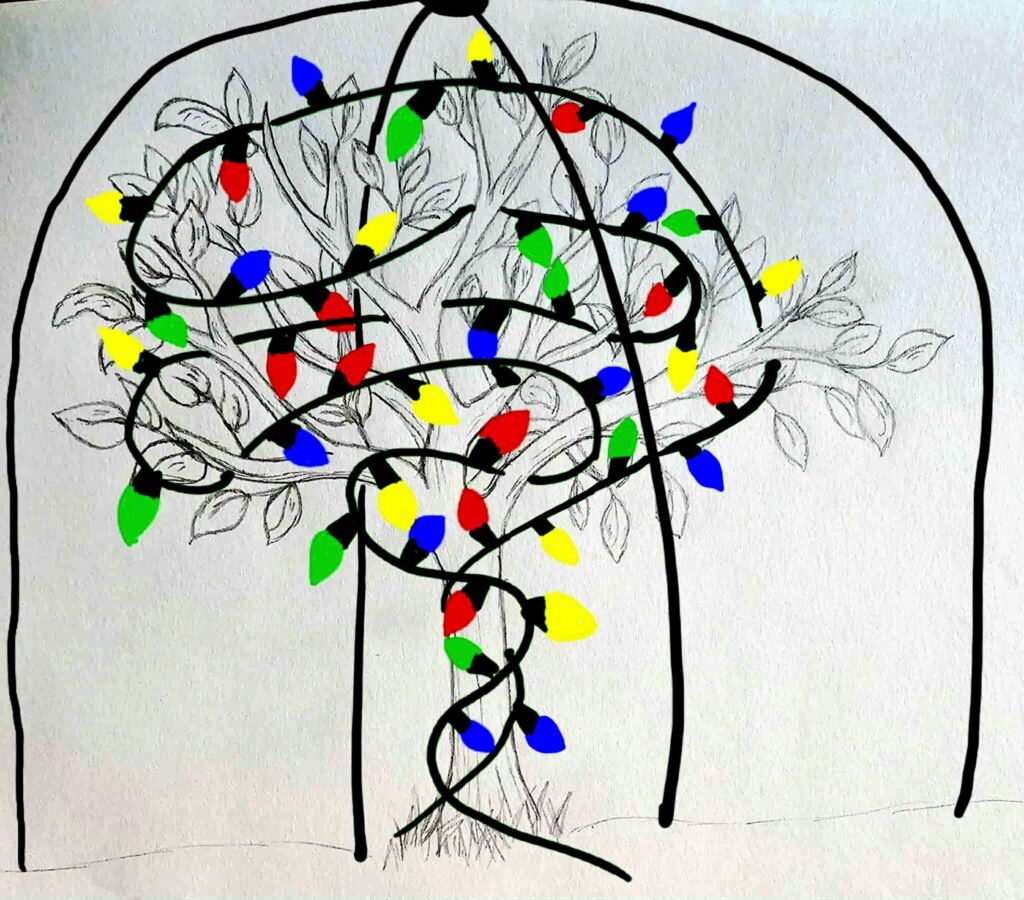
- Additional Heat for Sensitive Plants: Carefully draping incandescent lights (think old Christmas tree lights) around your young trees in your garden beds, beneath the cloth, generates additional warmth that will be trapped inside it’s little tent. This would be particularly useful for very sensitive plants, or any plants you’re “pushing the zone” with. Be wary of heat lamps, as they could start a fire. Use common sense whenever using any other source of heat.
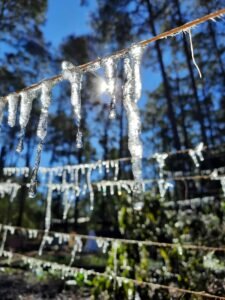
- DO NOT OVERHEAD WATER! Do you see the picture at the beginning of this article? It sure is pretty, right? Just as pretty as all the plants also covered in a sheath of ice. And then it melted, along with all the life in every plant in my garden that was touched by this water. Yes, large farms run overhead irrigation with systems specifically meant for this purpose, and they run it from before the freeze until several hours after the freeze. Regular home irrigation systems aren’t designed for this purpose; you will end up wasting water, money, and your plants. Trust me.
Okay, so there we are. Move, Water, Mulch, Cover, Secure. And look, some sort of damage may still occur. It’s the risk we take pushing our growing season out so late. A breeze will blow a cover away, a naughty cat will decide to play in a cloth, or it’ll get colder than we thought. Don’t panic. All may not be lost. Read on to the next tab to see what to do post-freeze, BEFORE you start hacking away at any damage or tearing things out.
Enjoy the small examples below of how to properly cover a fruit tree!
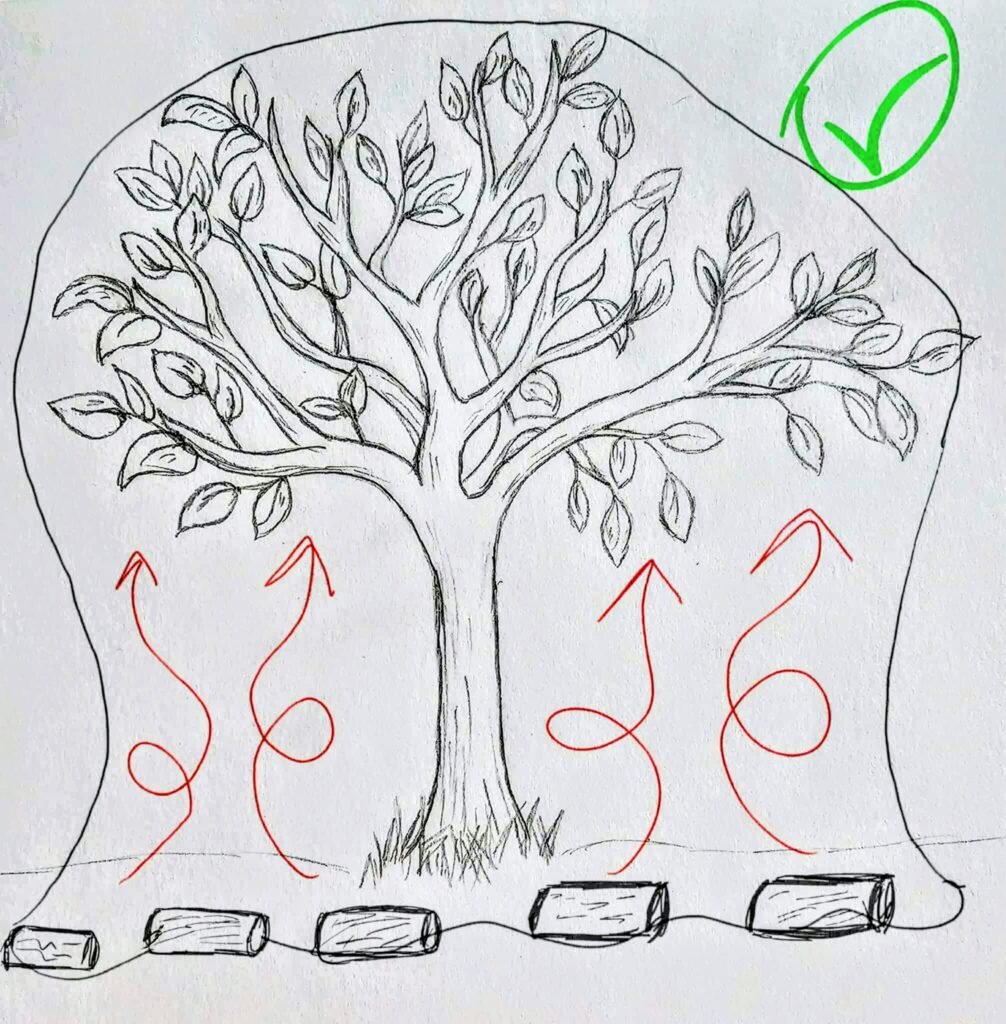
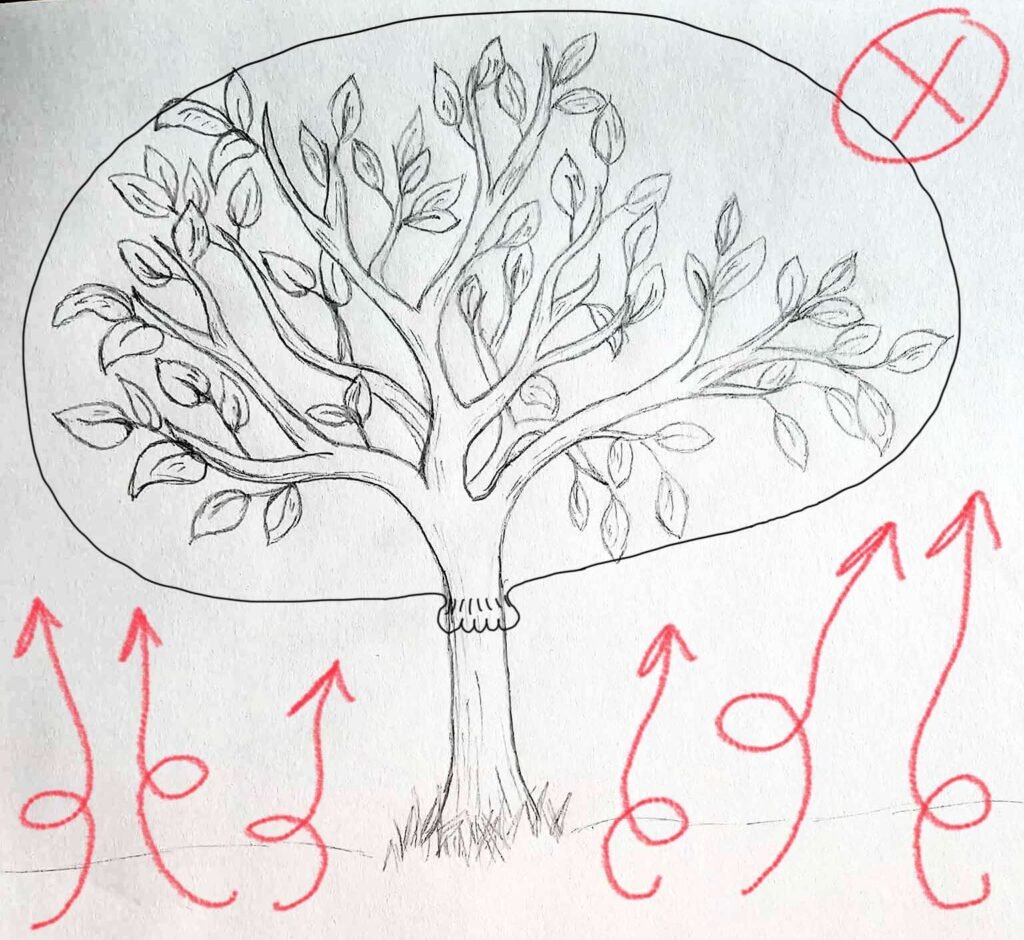
Use The Natural Heat: Ghost, Not Lollipop
–DO: Drape your cloth over the plant and allow it to come down to the ground. Secure it with heavy objects to ensure the wind can’t sneak underneath or dislodge your cloth. Natural heat from the ground will radiate up and stay within the cloth.
–DON’T cover only the top of the plant, exposing the stem to the cold and keeping natural heat away from the plant itself.
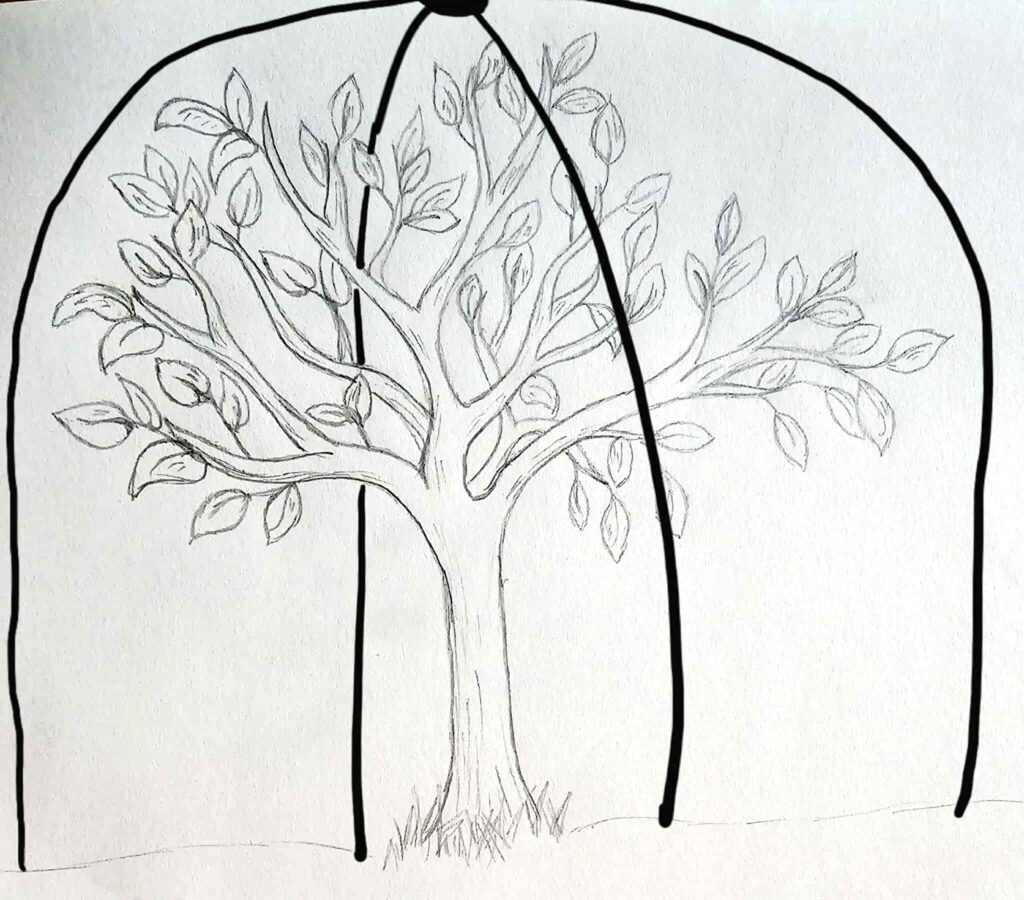
Additional Improvements
–Preventing Leaf Burn From Cloth Contact:If possible, keep the cloth from directly touching the plant using sticks, garden stakes, poles, or whatever else you have available to make a small frame around the plant. You don’t have to get crazy, even three sticks taller than the plant itself is enough. Drape your cloth over this, then secure.
–Lights For Additional Heat: Incandescent lights (like the old Christmas tree lights) strung up beneath the cloth and around the plant can be a source of warmth for extra sensitive plants, particularly if you’re “pushing the zone” and growing things meant for a warmer climate. Of course, observe all safety warning.
Put Those Pruning Shears Away!
The freeze is over (well, atleast this one!), phew! If you’re like me, you run outside the first moment you can and start inspecting the damage. Before you start panicking or pruning, here is what to look for and some important things you should know:
Uncover; Water (Don’t Fertilize); Inspect; Wait To Prune!
- Uncover Those Lollipops! While light frost cloths can still let some light through, heavier cloths and darker cloths don’t, and should be removed once the cold weather event is over to allow for natural sunlight and air circulation.
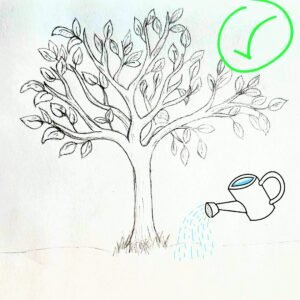
- Soil Check For Watering: Plants will struggle to get water from frozen ground. While this isn’t often a prolonged problem here in Central Florida, and good mulching inhibits the soil from freezing, it doesn’t hurt to take a look. Watering the soil will help it thaw.
- Don’t Fertilize: While watering with regular water is fine, feeding fertilizer will stimulate the plant to wake up and push new growth. Save this for the spring, when there’s no more chance of another frost or dropping temperatures killing off tender new growth.
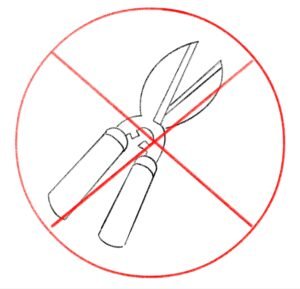
- Wait to Prune! Some damage isn’t immediately obvious directly after a freeze, and some is. As things warm up and the cell walls within the leaves relax, you’ll get a clear picture of what’s dead, what’s just burned, and what will live on for another day. Before you start clipping and nipping and tidying things up, keep these things in mind.
- Any stems or leaves that are mushy or soft can be removed to avoid the risk of fungal growth.
- Leave those Leaves! Brown and dead foliage only looks bad, but it’s actually a good insulator for the plant against any future freezes. This even includes things like drooping, yellow, and brown banana leaves; they help to insulate the thick stem during the cold weather.
- Wait ‘Till Spring To Prune: Wait until it starts warming up and all chance of frost is past to do any serious damage control pruning. This will give you a chance to see where healthy new growth is coming out, and which branches are toast. Lightly scratching at the bark/skin also helps to pinpoint exactly where healthy plants tissue begins and ends; light green means alive, brown means dead.
- Be Prepared For More: Unless it’s spring and we’re in the clear, don’t pack all your protective gear away quite yet. Leave it someplace handy so it’s not so much work next time to drag everything out and get everything covered.